
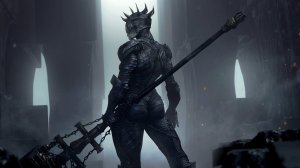
In an era where souls-like games have proliferated across the gaming landscape, standing out from the crowd requires more than just competent execution of familiar mechanics. Mortal Shell 2, the highly anticipated sequel from developer Cold Symmetry, manages to accomplish exactly that by taking the established conventions of the genre and transforming them in meaningful, often surprising ways. Set within a haunting dark fantasy world that blends gothic architecture, medieval imagery, and otherworldly themes, the game initially presents itself as another entry in a crowded field. However, beneath its familiar surface lies an experience that challenges assumptions about what souls-like games can be, delivering fresh mechanics that breathe new life into well-worn territory. For players who bounced off the original Mortal Shell or simply crave innovation in their challenging action RPGs, this sequel offers compelling reasons to take notice.
Revolutionary Combat Without Stamina Management
Perhaps the most immediately striking departure from souls-like conventions is Mortal Shell 2’s complete elimination of the stamina meter. This fundamental change to the genre’s established rulebook has far-reaching implications for how combat feels and flows. Players are free to attack, dodge, and maneuver as many times as they desire without pausing to catch their breath or watching a depleting bar anxiously. This design choice gives the combat an aggressive, relentless cadence that stands in stark contrast to the measured, stamina-conscious approach required by games like Dark Souls or Elden Ring. Rather than backing away after successfully evading a series of enemy strikes, players can immediately transition into their own offensive barrage, maintaining pressure and momentum throughout encounters.
However, this freedom doesn’t transform the game into a mindless hack-and-slash experience. Cold Symmetry has implemented careful balancing to ensure that deliberate play remains essential. Attack animations cannot be cancelled, meaning every swing of a weapon must be calculated and intentional. Overcommitting to a combo with slower weapons like the Great Martyr’s Blade or the devastating Obsidian Hammer leaves players vulnerable to counterattack. The original Mortal Shell received criticism for its often gratingly sluggish combat encounters, and this sequel directly addresses those concerns. While the pacing remains methodical rather than frenetic, the animations feel considerably snappier without sacrificing the sense of weight and visceral impact that defines the genre’s best combat systems.
The physical sensation of combat can best be described as genuinely meaty, with each strike creating a satisfying crunch as weapons cleave through flesh, separate limbs, and send heads rolling amidst torrents of crimson. The weapon variety enhances this experience significantly, ranging from massive scythes and reaching spears to dual katanas that ingeniously transform into a devastating axe. Each weapon type feels distinct and offers its own rhythm of light and heavy attacks that flow into unique combo patterns. Unfortunately, the upgrade economy somewhat limits experimentation, as players typically only accumulate enough resources to fully upgrade a single weapon by midgame, making it impractical to switch to alternative armaments despite an expanding arsenal.
Innovative Mechanics Reshape Defensive Play
Complementing the core melee combat is a sidearm system that adds another dynamic layer to encounters. Players begin with a short-range shotgun before gaining access to more exotic options, including a miniature Gatling gun capable of shredding multiple opponents and a lute that causes enemies to turn on each other after a forceful strum. These sidearms operate on Resolve, a resource replenished through successful melee attacks, creating an intricate dance between ranged and close-quarters combat that rewards aggressive engagement.
The defensive options in Mortal Shell 2 showcase Cold Symmetry’s most innovative design philosophy through the introduction of Seals. These new items essentially deconstruct what would normally be standard souls-like mechanics, making them modular and interchangeable rather than universal defaults. The signature Harden mechanic from the first game, which allows players to calcify their body and absorb an incoming attack, returns but is now tied to a specific Seal rather than being universally available. Blocking and parrying similarly require equipping the appropriate Seal, with each option providing its own risk-reward profile. One Seal removes blocking entirely but tightens the parry window, demanding greater precision while delivering more substantial break damage when timing is perfect.
This system opens tremendous build variety, particularly when combined with the titular Mortal Shells. Players control the Harbinger, a faceless, relatively weak entity possessing the power to inhabit fallen warriors scattered throughout the world. Eight Shells total can be discovered, each found at their character’s final resting place in evocative locations ranging from warriors impaled upon their own greatswords to bodies hastily stuffed into shallow graves. Every Shell adheres to rigid character archetypes with predetermined stats that can be upgraded but never fundamentally altered. While this might initially seem restrictive, it creates tangible differences in playstyle between characters, with variety emerging through combinations of weapons, Seals, and the new Tarstone system.
Diverse Shells Create Distinct Playstyles
The Shell variety demonstrates Cold Symmetry’s commitment to meaningful player choice. Eredrim functions as a knight archetype capable of lunging at enemies with devastating shoulder bashes that deal significant break damage. His passive ability, aptly named Executioner, allows instant execution of low-health enemies, with each riposte raising the health threshold at which executions become available. For players who prefer aggressive front-foot combat, Eredrim delivers constant satisfaction. Alternatively, Tiel operates as a thief character who can turn invisible for short durations, emerging from shadows to strike with swift daggers. Perfectly timed dodges extend his invisibility while dealing stagger damage, rewarding skilled defensive play.
Perhaps most intriguing is Sariel, who fires parasitic thorns that hunt down nearby enemies, nullifying their next melee attack while inflicting Pain on himself. Pain manifests as a grey portion of the health bar that can be lost in a single hit or cured through offensive action. When Sariel has no Pain, fifty percent of incoming damage converts to Pain rather than actual health loss. Reaching the Pain limit grants faster dodges, creating a masochistic playstyle that paradoxically becomes more powerful when the character suffers most. Tarstones add further customization layers, unlocking everything from specific buffs to powerful special attacks. These can be found through exploration, dungeon completion, and boss defeats, eventually allowing for highly specialized builds focused on critical damage, critical chance probability, or guaranteed critical hits at regular intervals.
A Challenging World Worth Exploring
Despite the numerous tools available to players, Mortal Shell 2 maintains a satisfying difficulty balance that hits the souls-like sweet spot where challenge rarely feels unfair. Deaths typically result from player error, always leaving room for improvement through both skill development and character upgrades. Difficulty modifiers exist for those seeking adjustments, with one Seal making encounters easier at the cost of disabling achievements, while another item increases challenge while unlocking otherwise inaccessible areas. This approach fits the genre better than binary difficulty settings, though the achievement penalty for easier play feels unnecessarily punitive given that most competitors refuse to offer accessibility options at all.
The open world itself proves fascinating to explore, offering dense, interconnected areas rather than vast empty expanses. Each region feels like a dedicated level from a linear game, yet multiple pathways connect them in surprising ways. While some environments like castles and murky swamps feel derivative, visual flourishes distinguish even familiar locales. An abbey features muted colors approaching monochrome, yet striking red leaves wrap around cold stone walls creating bursts of vivid contrast. Elsewhere, unsettling human teeth carved into cave walls, monolithic structures punctuating horizons, and once-picturesque villages now plagued by rabid cultists reward curious exploration. The game does suffer from excessive fall deaths, as the suspended world map creates numerous opportunities for deadly drops, particularly when attacks knock players several feet backward toward precipitous edges.
Enemy variety impresses throughout, featuring armored knights wielding swords or spears, fleet-footed assassins, religious fanatics, large bearded human skulls scuttling on four legs, insect-like creatures with deadly pincers, and rock-throwing giants among countless others. Each enemy type employs meaningfully diverse approaches with multiple attack patterns and feints designed to challenge player expectations. While this variety plateaus somewhat during the second half, introducing variants rather than entirely new opponents, repetition rarely becomes problematic. Boss encounters range from genuinely threatening headline fights to occasionally simplistic mini-bosses whose predictable patterns fail to challenge players who have mastered the generous parry windows.
Expert Opinion: Mortal Shell 2 represents a significant step forward for Cold Symmetry and demonstrates that the souls-like genre still has room for meaningful innovation. By questioning fundamental assumptions like stamina management and modularizing defensive mechanics through the Seal system, the game creates a distinctive identity that should influence future entries in the genre. While some balance issues and environmental hazards require refinement, this sequel positions Cold Symmetry as a developer capable of genuine creative vision rather than mere imitation.